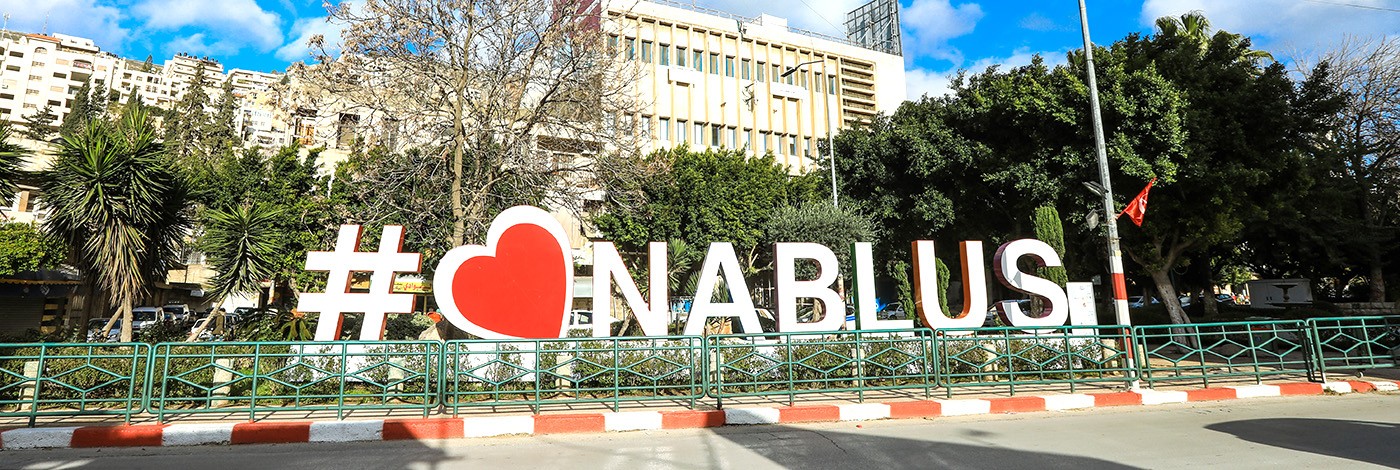
Founded by Roman Emperor Vespasian in 72 AD, Nablus, traditionally identified as Biblical Shechem, is a major city in the West Bank some 50 kilometers north of Jerusalem. It is a major commercial and cultural center hosting the Palestine Stock Exchange and Al-Najah University, one of the largest academic institutions in Palestine.
Located between the two towering mountains of Ebal and Gerizim, Nablus had exchanged conquerors in its 2,000-year history, flourishing to become one of the largest cotton producers in the Levant during the 19th century. Its economic power and strategic location were pivotal in making Nablus a significant stop on trade routes between Egypt and Syria. Nablus, later on, rose from a largely rural town into an essential bustling commerce center, with hundreds of local industries such as its renowned sabon nabulsi or castile soap, vegetable oil, textiles, dairy products, leather tanning, and several food processing and heavy equipment plants to name a few.
Nablus hosts its version of Jerusalem's Old City. This old part of town consists of nine quarters that uniquely preserve an authentic traditional Palestinian urban landscape. It is replete with quaint little shops offering visitors an endless array of wares, from food and textiles to traditional handicrafts and local cosmetics. Unfortunately, the old city also suffers from decay and is on the list of endangered national sites.
Culture is what makes this city a delightful destination for visitors. Its unique folkloric costumes, exquisite handicrafts, succulent high cuisine with the queen of all Middle Eastern desserts—the legendary Kunafeh—make Nablus an irresistible 'sweet journey' on any tour of the Holy Land.
Nablus is located 50 km north of Jerusalem. It is 70 km from the Allenby Bridge, 40 km from Ben Gurion Airport, and 69 km from the Sheikh Hussein Bridge.
Top Tourist Attractions
- Tell Balata. Surrounded by springs and favorable weather, Tell Balata is strategically located in a mountain pass between the mountains of Ebal and Gezirim. This interesting gem of the past is a must-see for any visitor to Nablus. This ancient 5,000-year-old Canaanite city is said to be in the exact location of Biblical Shechem.
- Mount Gerizim. One of the highest peaks in the West Bank, Mount Gerizim, is considered a sacred mountain to the Samaritans who, for thousands of years, have held the belief that it was for them to worship God there, and not on Temple Mount. Thousands of people join annually to celebrate the Samaritans' ceremonial procession, a tradition that has survived for thousands of years.
- Jacob's Well. It is a deep rock-hewn well, where Jacob once dwelt. It is considered a pilgrimage destination that commemorates the encounter of Christ with the Samaritan Woman. Today, Jacob's Well is secluded within the complex of an Eastern Greek Orthodox monastery.
- Joseph's Tomb. Venerated by Jews, Samaritans, Christians, and Muslims, this sacred site is said to house the remains of Prophet Joseph. An Ottoman building with a white dome situated north of Jacob's Well, the shrine marks Joseph's tomb.
- Pigeon's Well. Located on the northwestern upper slope of Mount Gerizim, this site offers visitors a spectacular view of the valley below. Pigeon's Well consists of large stones cloistered within an ancient monastery complex with a gate, stable, courtyard, cistern, prayer, and meeting rooms.
- Sebastia. Sebastia is a tremendous treat for lovers of the old! As old as 10,000 years, the city had been the site of successive conquerors, starting with the Canaanites, Israelites, Assyrians, Hellenes, Romans, Byzantines, and ending with the early Islamic conquests 7th century.
- Old City. It is a beautiful trip through historic streets filled with local vendors selling a variety of produce. We will recommend the best places for you to buy their famous handicrafts and soups and try the sweet Arabic Kunafeh.